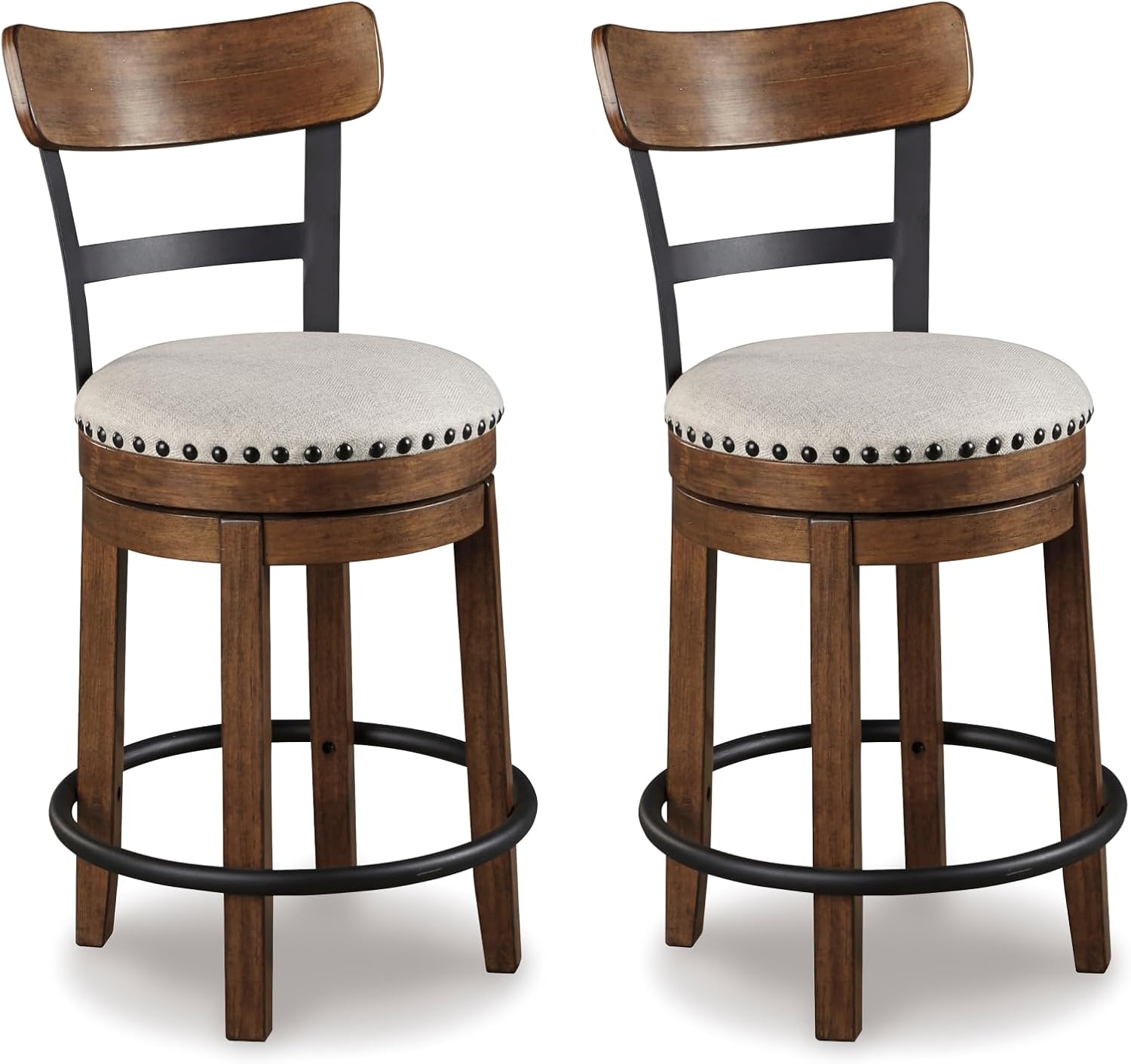
Signature Design by Ashley Valebeck Swivel Barstool With Back, Rustic-Industrial Wood and Metal, 360-Degree Swivel Counter Height Stool for Kitchen Island Seating, Linen Color




Price:
(as of Jun 22, 2026 12:26:27 UTC – Details)

Signature Design by Ashley Valebeck Swivel Barstool – An In‑Depth Review
Signature Design by Ashley Valebeck has positioned the Valebeck swivel barstool as a bridge between modern comfort and vintage‑industrial character. Marketed as a counter‑height seating solution for kitchen islands, breakfast bars, and open‑concept dining areas, the stool promises a blend of warm wood tones, sturdy metal framing, and soft upholstery. The following review examines every facet of the product—design, materials, ergonomics, functionality, fit, assembly, and overall value—using only the information supplied by the manufacturer. No external customer opinions or ratings are referenced.
1. Design & Aesthetics
The Valebeck stool is described as embodying a casual‑industrial style. This aesthetic is achieved through a deliberate juxtaposition of natural wood elements and exposed metal components. The wood—identified as a combination of solid wood, engineered wood, and likely a veneer or laminate finish—provides the warm, rustic undertone that softens the harder edges of the metal frame. The metal, presumably powder‑coated steel or iron, contributes the industrial edge, visible in the stool’s legs, footrest, and possibly the swivel mechanism housing.
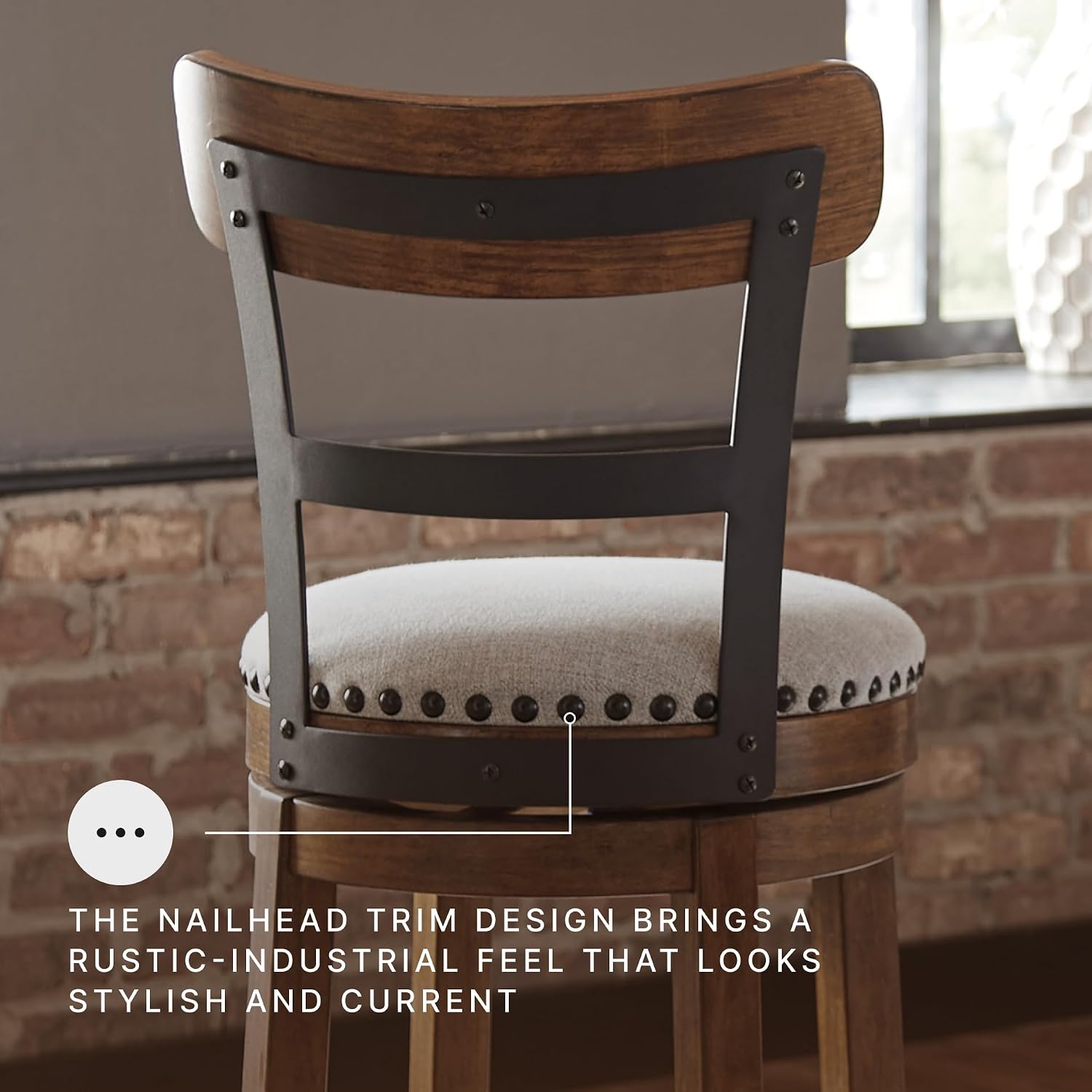
A noteworthy visual detail is the nailhead trim that runs along the backrest and possibly the seat perimeter. This classic upholstery accent adds a subtle decorative flourish, hinting at traditional craftsmanship while still fitting within an industrial palette. The upholstery itself is rendered in a linen‑colored 100 % polyester fabric. Linen‑look textiles are prized for their relaxed, slightly textured appearance, which can temper the starkness of metal and wood without sacrificing durability. The neutral hue allows the stool to blend with a wide range of cabinetry finishes—from light oak and whitewashed pine to darker walnut or blackened steel—making it a versatile piece for both contemporary and farmhouse‑inspired kitchens.
Overall, the design language leans toward a balanced contrast: the stool feels grounded and substantial due to its wood and metal construction, yet the soft seat and backrest inject a welcoming, lived‑in feel. This duality is precisely what the product description aims to convey—a piece that can transition from hurried meal prep to relaxed conversation without looking out of place.
2. Construction & Materials
The manufacturer lists the primary materials as wood, engineered wood, and metal, with the seat and back upholstered in 100 % polyester. While the exact species of wood are not disclosed, the inclusion of engineered wood suggests a core designed for dimensional stability—helping the stool resist warping or cracking under fluctuating kitchen humidity levels. Solid wood components, likely used for the visible legs or apron, contribute to the stool’s aesthetic authenticity and structural integrity.
Metal is employed for the frame’s load‑bearing elements: the legs, the footrest ring, and the internal swivel mechanism. Powder‑coating is a common finish for such components, offering resistance to scratches, chips, and corrosion—important attributes for a piece that will encounter frequent movement, occasional spills, and the occasional knock from pots or pans.
The polyester upholstery is notable for its practical benefits. Polyester is inherently resistant to staining, fading, and stretching, making it well‑suited for high‑traffic kitchen environments where food splatters and regular cleaning are expected. Its synthetic nature also means it can withstand repeated cleaning with mild detergents without losing shape or color vibrancy. The linen‑like texture adds a tactile softness that encourages longer sitting periods, aligning with the product’s claim of “supportive back [encouraging] longer, more comfortable sitting.”
In terms of durability, the combination of a solid wood/metal frame and a synthetic upholstery cover suggests a stool built to endure daily use. The absence of any mention of removable cushions or replaceable covers implies that the upholstery is fixed, which simplifies maintenance but also means that any significant wear would necessitate reupholstering or replacement of the entire seat/back unit.
3. Comfort & Ergonomics
Comfort is addressed through several design choices:
-
Cushioned Seat – The seat is described as “comfy cushioned,” indicating a layer of foam or similar padding beneath the polyester cover. While the exact foam density is not provided, the presence of cushioning suggests an effort to mitigate the hardness often associated with stools made primarily of wood and metal.
-
Supportive Backrest – A backrest is included, a feature that distinguishes this stool from many backless bar stools. The backrest likely follows the contour of the lumbar region, offering support that encourages upright posture and reduces lower‑back fatigue during extended periods of sitting—such as when lingering over breakfast or chatting while preparing a meal.
-
360‑Degree Swivel – The seat rotates fully around a central axis. This feature enhances ergonomics by allowing the user to reorient themselves without having to stand up or shift the stool’s base. Whether reaching for a spice rack, turning to face a guest, or glancing at a television mounted on an adjacent wall, the swivel reduces strain on the neck, shoulders, and spine.
-
Footrest – Though not explicitly mentioned in the description, most counter‑height stools of this style incorporate a footrest ring integrated into the metal frame. A footrest promotes proper leg positioning, reducing pressure on the thighs and improving circulation—another subtle ergonomic advantage.
Together, these elements aim to create a seating experience that feels less like a perch and more like a chair, suitable for both brief tasks and longer social gatherings.
4. Functionality & Features
The Valebeck stool is positioned as a multi‑purpose seating solution for several typical kitchen scenarios:
-
Everyday Meals – The counter height (approximately 36–38 inches, inferred from the overall height of 37 inches) aligns with standard kitchen island heights, allowing users to sit comfortably while eating or snacking.
-
Casual Entertaining – The swivel capability facilitates interaction with guests seated elsewhere in the room, making the stool ideal for cocktail parties or informal gatherings where people move around the island.
-
Food Preparation – Being able to turn toward prep surfaces without standing up can improve workflow efficiency, especially when the island serves as a primary cooking station.
-
Breakfast Bar Seating – The stool’s dimensions and style make it a natural fit for a breakfast bar, where a slightly more relaxed aesthetic is often desired.
Additional functional details highlighted include:
-
Nailhead Trim – Beyond aesthetics, nailheads can add a minor degree of reinforcement to the upholstery edges, helping to prevent fraying over time.
-
Balanced Proportions – The stool’s width and depth are both 19.5 inches, giving it a square footprint that contributes to stability. The height of 37 inches places the seat surface roughly 28–30 inches above the floor (assuming a seat thickness of about 7–9 inches), which is typical for counter‑height seating.
-
Ready for Easy Setup – The manufacturer notes that assembly is required, implying that the stool ships in a flat‑pack or partially assembled state. This is common for furniture sold online and helps reduce shipping volume and cost.
5. Dimensions & Fit
The listed dimensions are 19.5 in (W) × 19.5 in (D) × 37 in (H). To evaluate fit, consider the following:
-
Counter Height Compatibility – Standard kitchen islands and countertops range from 36 to 42 inches in height. A stool with an overall height of 37 inches suggests a seat height of approximately 28–30 inches (depending on seat thickness). This falls within the typical counter‑height stool range (24–30 inches seat height), making it suitable for most 36‑inch counters. For taller counters (42 inches), the stool may feel slightly low, but many users still find it comfortable with a slight foot elevation.
-
Footprint – The 19.5‑inch square base provides a stable footprint without consuming excessive floor space. In a typical island layout with 42‑inch wide seating zones, two of these stools can sit side‑by‑side with a modest gap, or three can be accommodated with tighter spacing, depending on the desired level of intimacy.
-
Clearance – The swivel mechanism necessitates a minimum clearance radius around the stool’s base. Users should ensure at least a few inches of free space on all sides to allow unrestricted rotation. In tight island configurations, this may be a consideration, though the relatively modest diameter helps mitigate potential interference.
Overall, the dimensions suggest the Valebeck stool is designed to be a versatile, middle‑ground option that fits comfortably within the majority of standard kitchen island configurations while offering enough presence to make a visual statement.
6. Assembly & Setup
The product description states that assembly required. While no step‑by‑step instructions are provided, typical assembly for this style of stool involves:
- Attaching the metal legs to the seat frame using bolts or screws.
- Securing the footrest ring (if separate) to the lower portion of the legs.
- Installing the swivel mechanism—often a pre‑assembled bearing plate that sits between the seat and the base.
- Affixing the backrest, which may involve aligning brackets and tightening fasteners.
- Finally, placing the upholstered seat/back assembly onto the frame and securing it with any necessary hardware.
Given the materials involved (wood, metal, polyester), the process likely requires only basic tools such as an Allen wrench or screwdriver, which are frequently included in the hardware pack. The estimated assembly time for a similar stool ranges from 15 to 30 minutes for a single individual with moderate DIY experience. Clear, illustrated instructions would further streamline the process, though the absence of such details in the description means prospective buyers should anticipate consulting the included manual.
7. Value & Pricing Considerations
Although the exact price point is not disclosed in the supplied information, we can infer a likely positioning based on the materials and features:
-
Material Cost – Solid wood and engineered wood components, paired with metal framing, place the stool in the mid‑range tier of bar stools. Fully metal or plastic stools tend to be less expensive, while all‑wood or premium upholstered models command higher prices.
-
Feature Set – The inclusion of a backrest, 360‑degree swivel, nailhead trim, and linen‑look upholstery adds value compared with basic backless or fixed‑seat stools.
-
Brand Reputation – Signature Design by Ashley is known for offering stylish, affordable home furnishings that balance aesthetics with durability. This brand positioning often translates to a competitive price point relative to similar offerings from larger furniture retailers.
Taking these factors into account, the Valebeck stool likely offers good value for consumers seeking a blend of style, comfort, and functionality without venturing into the luxury price segment. Prospective buyers should compare the stool’s specifications (dimensions, materials, swivel capability) against alternatives in the same price bracket to confirm that the features align with their personal priorities.
8. Styling Tips & Pairings
Given its casual‑industrial aesthetic, the Valebeck stool integrates smoothly with several kitchen design schemes:
-
Modern Farmhouse – Pair the stool with a reclaimed wood island, white shaker cabinets, and black metal pendant lights. The linen upholstery softens the industrial edges, while the nailhead trim echoes the farmhouse’s traditional detailing.
-
Conturban Industrial – Combine with concrete countertops, exposed brick or steel accents, and open shelving. The stool’s metal legs and wood tones mirror the room’s material palette, creating a cohesive look.
-
Transitional Kitchen – Use the stool as a bridge between classic and modern elements. For instance, place it alongside a quartz island with brushed nickel hardware; the stool’s neutral linen color will not clash with either warm or cool tones.
-
Eclectic Mix – The stool can act as a grounding piece amidst more colorful or patterned accessories—such as patterned seat cushions on neighboring stools, vibrant backsplashes, or bold artwork—allowing those elements to pop while the stool maintains a balanced, neutral foundation.
When styling, consider the height of accompanying bar chairs or stools. Maintaining a uniform seat height across all seating ensures visual harmony and functional consistency, especially if the island serves multiple purposes (dining, prep, casual lounging).
9. Potential Drawbacks (Based on Specified Features)
While the product description highlights many strengths, it is prudent to consider limitations that can be inferred from the stated features:
-
Fixed Upholstery – The lack of mention of removable or washable covers means that stain removal must be done in place. Though polyester resists stains, spills that set in could require professional cleaning or, in worst cases, replacement of the upholstered panel.
-
Assembly Dependency – The requirement for assembly may be a deterrent for users who prefer ready‑to‑use furniture. While the process is likely straightforward, any missing hardware or unclear instructions could lead to frustration.
-
Weight Capacity Not Stated – The description does not provide a maximum weight rating. Heavier users may wish to confirm load limits before purchase, especially given the combination of wood and metal components.
-
Swivel Mechanism Longevity – Swivel bearings can wear over time, particularly if subjected to frequent lateral forces or if not maintained (e.g., occasional lubrication). The absence of details about bearing type or maintenance recommendations leaves some uncertainty regarding long-term smooth operation.
-
Footrest Absence Mention – Though typical for this style, the footrest is not explicitly described. If the model omits a footrest, users who rely on leg support may find the stool less comfortable for extended periods.
These points are not definitive flaws but rather considerations that stem from the information given. Prospective buyers should verify any uncertainties directly with the seller or product documentation before committing to a purchase.
10. Final Verdict
The Signature Design by Ashley Valebeck swivel barstool presents a thoughtfully assembled package that attempts to satisfy the competing demands of style, comfort, and practicality in a kitchen setting. Its casual‑industrial design—achieved through a blend of wood, metal, and linen‑colored polyester upholstery—offers visual versatility that can complement a range of kitchen aesthetics, from modern farmhouse to transitional and industrial interiors.
Key strengths include the 360‑degree swivel, which enhances usability during multitasking; the supportive backrest, which encourages longer, more relaxed seating; and the nailhead trim, which adds a subtle decorative touch without overwhelming the overall look. The dimensions (19.5 × 19.5 × 37 inches) position the stool as a fitting choice for most standard counter‑height islands, while the materials suggest a construction geared toward durability and everyday wear.
Potential buyers should weigh the assembly requirement, the fixed upholstery, and the unspecified weight capacity against their personal needs and preferences. If the stool’s dimensions align with their island height, they appreciate the convenience of a swivel seat, and they value a neutral, easy‑to‑clean fabric, the Valebeck stool is likely to serve as a reliable and stylish addition to their kitchen seating arsenal.
In summary, based solely on the manufacturer’s supplied details, the Valebeck swivel barstool offers a balanced mix of form and function that merits consideration for anyone seeking a comfortable, aesthetically pleasing counter‑height stool for kitchen island dining, breakfast bars, or casual entertaining spaces.