
LANTEFUL 3 Tier Shoe Rack for Closet, Shoe Organizer with 5 Hooks, Long Shoe Shelf Storage for Sneaker and Boot Stackable Free Standing Shoe Rack for Entryway, Garage, Small Spaces, Dorm



Price:
(as of Jun 22, 2026 03:11:08 UTC – Details)

LANTEFUL 3‑Tier Shoe Rack – A Comprehensive Look at Design, Functionality and Practical Use
When space is at a premium—whether in a bustling entryway, a compact dorm room, a garage workshop, or a modest bedroom closet—finding a shoe‑storage solution that balances stability, versatility and ease of use can feel like a constant juggling act. The LANTEFUL 3‑Tier Shoe Rack promises to meet those demands with a straightforward, stackable design that incorporates a few thoughtful extras such as built‑in hooks and a water‑repellent non‑woven shelf. Below is an in‑depth examination of the product’s construction, features, intended applications and overall value, drawn solely from the information supplied by the manufacturer.
1. Overview of the Product
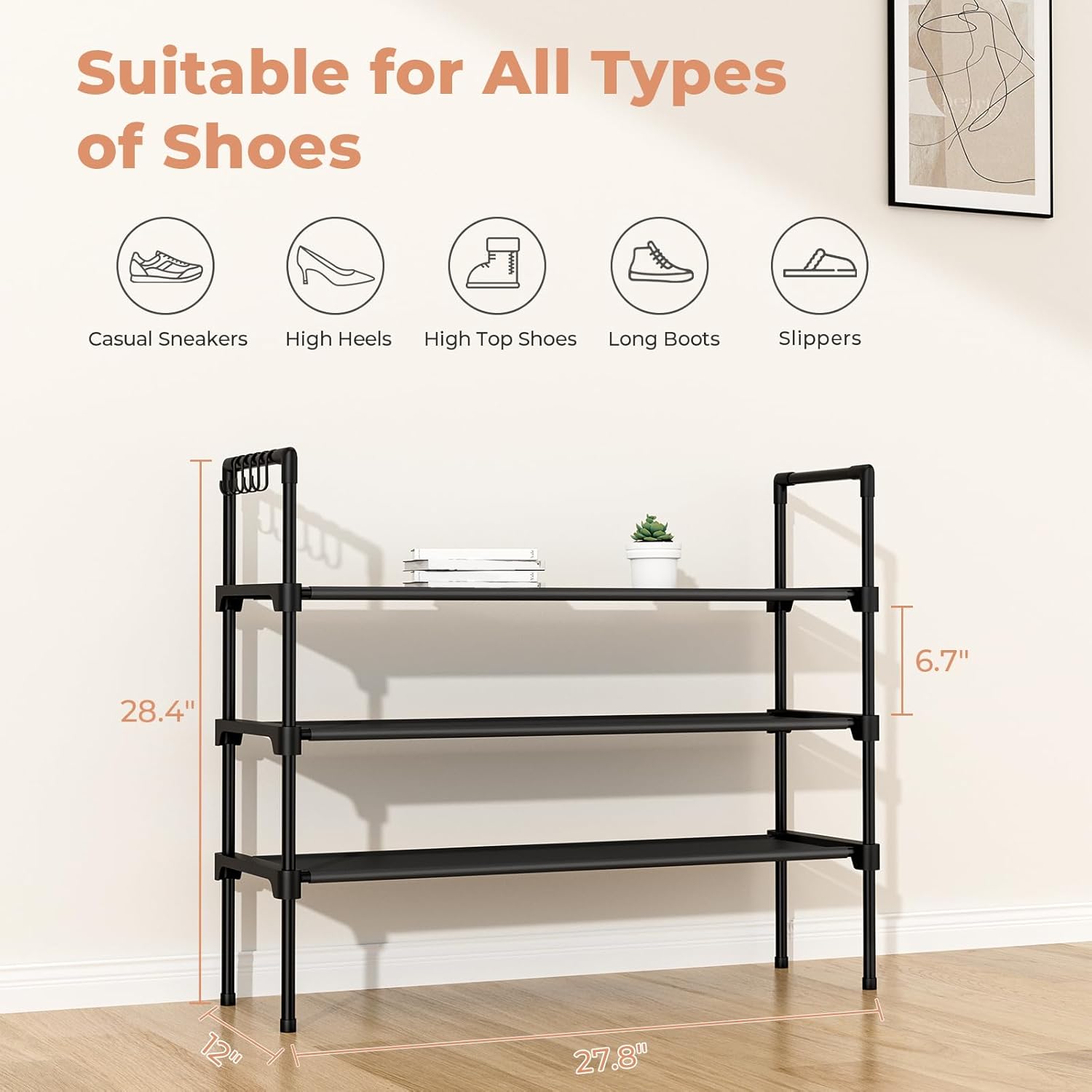
The LANTEFUL shoe rack is marketed as a three‑tier, free‑standing organizer whose footprint measures 27.8 inches wide, 12 inches deep and 28.4 inches tall. Each shelf level provides roughly 6.7 inches of vertical clearance, a dimension the brand highlights as sufficient for sandals, slip‑ons, sneakers, boots and heels. In addition to the shelving, the unit incorporates five integrated hooks positioned on the side or front frame, intended for hanging accessories such as hats, bags, scarves or keys.
The construction combines three primary materials:
- Thickened metal tubes forming the main frame, which the description characterizes as “sturdy and durable.”
- High‑strength plastic connectors that join the tubes and are said to be “thickened” to increase load‑bearing capacity.
- Premium non‑woven fabric that lines each shelf, described as waterproof and dust‑resistant while also preventing shoes from slipping off.
The rack is advertised as detachable and stackable, meaning a user can remove a tier to accommodate taller footwear or combine two units to create a six‑tier vertical tower. Assembly is presented as tool‑free, with an optional video guide to walk newcomers through the process.
2. Build Quality and Durability
Metal Frame
The backbone of the rack is a series of metal tubes that have been selected for their rigidity. By describing the tubes as “sturdy” and emphasizing their suitability for “all types of shoes,” the manufacturer signals an intention to support the cumulative weight of multiple pairs without noticeable flex or wobble. Metal, when properly finished, resists corrosion—a useful trait for placement in entryways where moisture from wet shoes or garage environments might otherwise degrade lesser materials.
Connectors
A common failure point in modular shelving systems lies at the joints. LANTEFUL addresses this by using thickened plastic connectors. The added thickness is meant to distribute stress more evenly across the joint, reducing the likelihood of cracking under load. While plastic is inherently lighter than metal, the reinforcement aims to bridge the gap between lightweight ease of handling and sufficient rigidity for everyday use.
Shelf Surface
Each tier is lined with a non‑woven fabric sheet. This material serves two purposes highlighted in the description: it acts as a barrier against dust and it provides a slightly grippy surface that helps keep shoes from sliding off the shelf. The claim of waterproofing suggests that the fabric has been treated or constructed in a way that repels liquid, which can be beneficial when storing damp footwear after a rainy walk or a workout. Non‑woven fabrics are also generally easy to wipe clean, a practical attribute for a shoe‑storage piece that will encounter dirt and occasional spills.
Hooks
The five hooks are molded into the same metal framework, meaning they share the same load‑bearing characteristics as the rest of the unit. Their placement—likely spaced along the vertical side or front—provides a convenient spot for lightweight accessories. Because they are integral to the frame, there is no separate hardware that could loosen over time.
3. Functional Design Elements
Tier Height and Shoe Compatibility
With each tier offering 6.7 inches of internal height, the rack can accommodate a wide range of footwear profiles. Low‑top sneakers, flats, sandals and even many ankle‑height boots should fit comfortably. Taller boots—such as work‑boot styles or certain fashion‑forward knee‑high designs—may exceed this clearance, prompting the user to either remove a tier (creating a taller opening) or store those items elsewhere. The ability to detach a tier thus adds a layer of adaptability that fixed shelving lacks.
Hook Utility
The inclusion of five hooks expands the rack’s utility beyond mere shoe storage. In an entryway, they can hold coats, leashes, tote bags or scarves; in a dorm, they might keep a backpack, a hat or a set of keys within easy reach; in a garage, they could serve as a spot for work gloves or a small tool pouch. This multi‑purpose approach helps the rack justify its footprint by serving as a mini‑organization hub.
Stackability and Customization
The notion that two units can be stacked to form a six‑tier tower speaks to a modular philosophy. For users whose shoe collections grow over time, this feature eliminates the need to purchase an entirely new piece of furniture; instead, they can simply add another identical rack. Conversely, the option to remove a tier allows the rack to conform to irregularly shaped items—think tall winter boots or a box of shoe‑care supplies—without sacrificing overall stability.
Assembly Experience
The manufacturer stresses that no tools are required for setup. The components—tubes, connectors, fabric shelves and hooks—presumably snap or slide together via a simple interlocking mechanism. An accompanying assembly video (referenced on the product page) is intended to further reduce the learning curve, making the rack accessible even to those who lack confidence with DIY projects. The tool‑free claim also implies that disassembly for relocation or reconfiguration is equally straightforward.
4. Intended Use Cases
Entryway and Front Door
The dimensions place the rack comfortably near a door without obstructing traffic flow. Its relatively shallow depth (12 inches) ensures it does not protrude far into the hallway, while the width (27.8 inches) offers enough surface area to hold multiple pairs of shoes typically removed at the entrance. The hooks add convenience for hanging jackets, leashes or mail, turning the rack into a compact “drop‑zone” for daily essentials.
Closet and Bedroom Storage
Inside a closet, the rack’s vertical orientation makes efficient use of height that might otherwise go unused. The three tiers can accommodate a rotation of everyday shoes, while the uppermost shelf can hold less‑frequently worn items such as dress shoes or seasonal boots. The non‑woven fabric helps keep the interior of the closet dust‑free, a subtle benefit for those who store shoes alongside clothing.
Dorm Rooms and Small Apartments
College dormitories often impose strict limits on furniture size and prohibit drilling into walls. A free‑standing, tool‑free rack that occupies less than three square feet of floor space fits neatly into these constraints. The ability to reconfigure the rack—whether by removing a tier for taller boots or stacking two units for a taller shoe tower—lets residents adapt the piece to changing needs throughout the academic year.
Garage and Utility Spaces
In a garage, the rack can keep work boots, gardening shoes or cleats off the concrete floor, reducing the risk of dirt tracking into living spaces. The metal frame’s resistance to occasional bumps and the plastic connectors’ tolerance for temperature fluctuations make it suitable for environments that experience more variation than a climate‑controlled interior. The hooks can hold safety gear, such as gloves or ear protection, further enhancing the rack’s role as a small utility station.
5. Advantages Derived from the Description
| Feature | Benefit |
|---|---|
| Thickened metal tubes | Provides a strong, rigid framework capable of supporting several pairs of shoes without sagging. |
| Reinforced plastic connectors | Improves joint durability, reducing the chance of breakage under load. |
| Waterproof non‑woven fabric shelves | Shields shoes from dust and moisture, simplifies cleaning, and prevents slippage. |
| Five integrated hooks | Adds versatile storage for accessories, increasing the unit’s overall utility. |
| 6.7‑inch tier height | Accommodates most common shoe types while keeping the overall profile low enough for tight spaces. |
| Detachable & stackable design | Enables customization for taller items or expansion as a collection grows. |
| Tool‑free assembly | Lowers the barrier to setup and allows quick reconfiguration or relocation. |
| Compact footprint (27.8” × 12”) | Fits in narrow hallways, closets, dorm corners, or garage nooks without dominating the area. |
6. Potential Considerations (Based Solely on Supplied Info)
While the description highlights numerous strengths, a balanced review also notes aspects that may require user attention:
- Clearance for Tall Footwear – The fixed 6.7‑inch tier height may be insufficient for exceptionally tall boots or high‑top sneakers unless a tier is removed. Users with a large collection of such items should consider the detachable‑tier feature or plan for alternative storage.
- Load Limits of Plastic Connectors – Although the connectors are described as thickened, they remain plastic. Extremely heavy loads (e.g., dozens of pairs of heavy work boots) could approach the material’s limits; however, the description’s emphasis on “stronger carrying capacity” suggests the designers accounted for typical residential shoe weights.
- Fabric Breathability – Non‑woven material, while waterproof and dust‑resistant, may not offer the same breathability as a mesh or canvas shelf. In very humid environments, moisture could accumulate underneath shoes if they are stored for extended periods without airflow. Periodic airing out or occasional removal of the fabric liner could mitigate this.
- Hook Load – The hooks share the same metal frame as the shelving, but they are likely intended for lighter items. Overloading them with heavy bags or equipment could cause bending or deformation over time. The description does not specify a weight limit for the hooks, so prudent use is advised.
- Stability on Uneven Surfaces – Although the metal tubes and thickened connectors aim to provide a sturdy base, placing the rack on a markedly uneven floor could introduce wobble. Using a small shim or leveling pad would be a simple remedy, though not mentioned in the product text.
7. Comparative Perspective (Implied by the Description)
When juxtaposed with more traditional shoe‑storage options—such as wooden shoe cabinets, over‑the‑door organizers, or simple floor racks—the LANTEFUL unit offers a hybrid approach:
- Versus Wooden Cabinets – It sacrifices the aesthetic warmth and potential for higher weight capacity of solid wood, but gains mobility, tool‑free assembly and the ability to adjust height via detachable tiers.
- Versus Over‑the‑Door Racks – It avoids the need for a door to hang from, eliminates concerns about door clearance or interference, and provides a stable base that does not rely on the door’s structural integrity.
- Versus Basic Floor Racks – The addition of a fabric shelf and integrated hooks offers extra protection and multifunctionality that a bare metal or plastic rack lacks.
Thus, the LANTEFUL rack appears positioned as a middle‑ground solution for consumers who prioritize ease of setup, adaptability and modest extra features over maximum load capacity or premium materials.
8. Practical Tips for Maximizing the Rack’s Utility
- Assess Your Shoe Mix – Before finalizing the configuration, lay out the shoes you plan to store. If you own many tall boots, consider leaving one tier detached to create a taller opening, or reserve the topmost shelf for those items and use the lower two for everyday footwear.
- Use the Hooks Strategically – Assign each hook to a specific category (e.g., one for keys, one for bags, one for hats) to avoid clutter and keep frequently used items within easy reach.
- Leverage Stackability – If you anticipate growth in your shoe collection, purchase a second unit now rather than later. Stacking them creates a neat, column‑like silhouette that can fit beside a closet or in a corner without consuming additional floor width.
- Maintain the Fabric Shelf – Periodically wipe the non‑woven surface with a damp cloth to remove dust buildup. If the fabric shows signs of wear, a gentle hand‑wash (if the manufacturer permits) can refresh it.
- Ensure Floor Levelness – Place the rack on the flattest surface possible. If the floor is slightly uneven, a thin rubber furniture pad under any low‑lying foot can stabilize the unit and prevent minor wobble.
- Combine with Other Organizers – In a garage setting, pair the rack with a wall‑mounted pegboard for tools; the hooks on the rack can hold personal items while the pegboard manages larger equipment.
9. Final Verdict
The LANTEFUL 3‑Tier Shoe Rack presents a well‑thought‑out, modular storage solution that addresses several common pain points associated with shoe organization: limited floor space, the need for quick assembly, and the desire for a bit of extra utility beyond mere shelving. Its combination of a sturdy metal frame, reinforced plastic connectors, waterproof non‑woven shelves and five integrated hooks delivers a cohesive package suited to entryways, closets, dorm rooms, garages and other compact environments.
While the fixed tier height may necessitate occasional reconfiguration for especially tall footwear, the detachable‑tier feature directly mitigates this limitation. The plastic connectors, though not as indestructible as metal joints, are described as thickened to improve durability, which should be sufficient for typical residential loads. The fabric shelf’s waterproof quality adds a practical layer of protection against moisture and dust, extending the life of stored shoes.
Overall, based solely on the manufacturer’s supplied information, the LANTEFUL shoe rack offers a balanced blend of stability, flexibility and convenience that makes it a compelling option for anyone seeking an adaptable, easy‑to‑set‑up shoe organizer that can grow alongside their storage needs.


