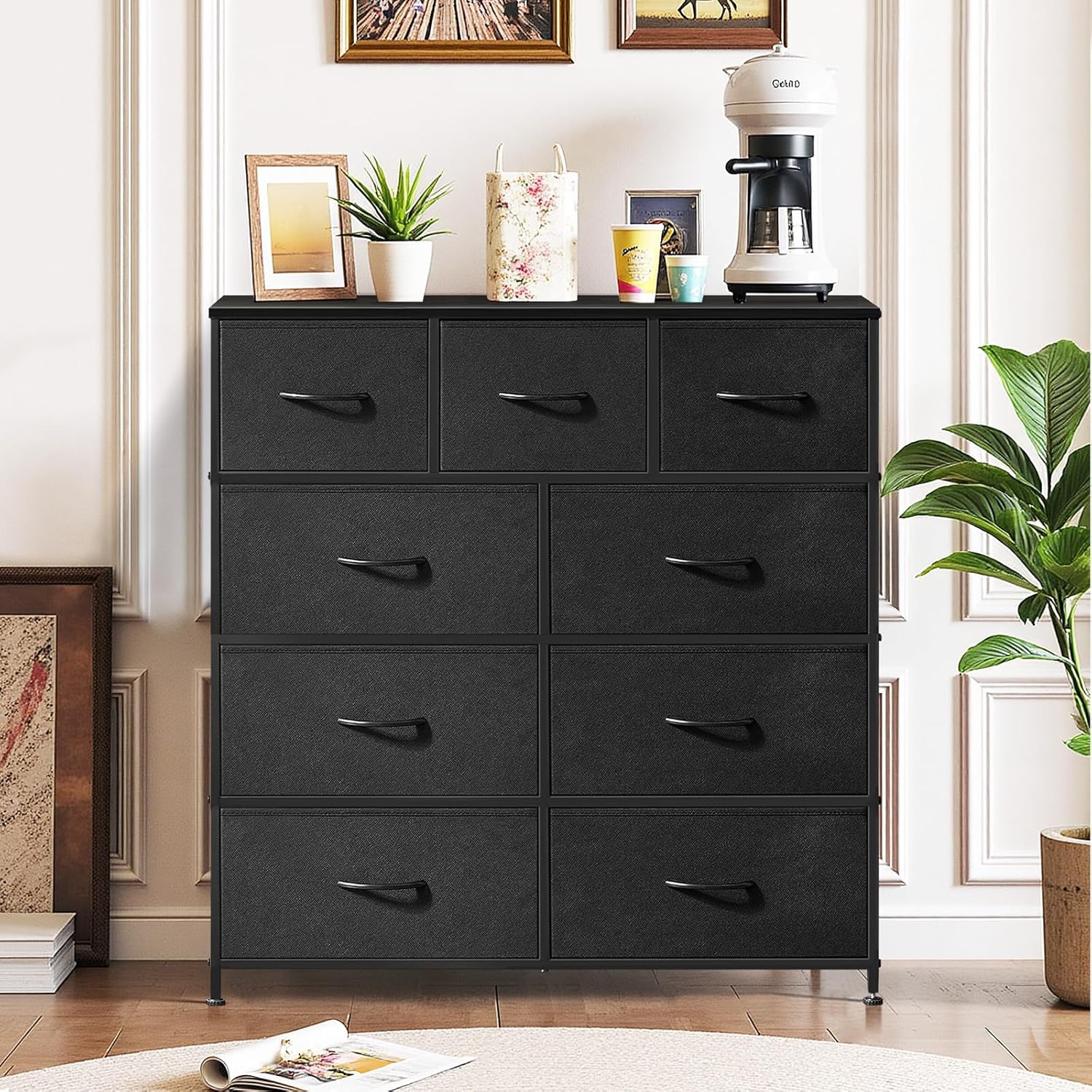
9-Drawer Dresser for Bedroom, Anti-Tip Tall Storage Organizer Chest of Drawers with Wooden Top and Metal Frame Fabric Bins for Closet, Living Room, Hallway, Entryway, Black


Price:
(as of Jun 22, 2026 00:36:54 UTC – Details)

9‑Drawer Dresser for Bedroom – A Comprehensive Review
When the need for extra storage collides with limited floor space, a well‑designed dresser can become the linchpin of an organized bedroom, hallway, or entryway. The 9‑Drawer Dresser for Bedroom, marketed as an anti‑tip tall storage organizer chest with a wooden top and metal frame fabric bins, promises a blend of durability, aesthetic flexibility, and safety. This review dissects each element of the product—construction, design, functionality, assembly, and suitability for various living environments—to help potential buyers determine whether it meets their storage expectations.
1. Overview of Specifications
| Feature | Detail |
|---|---|
| Overall Dimensions | 11.8 in (D) × 39.4 in (W) × 40 in (H) |
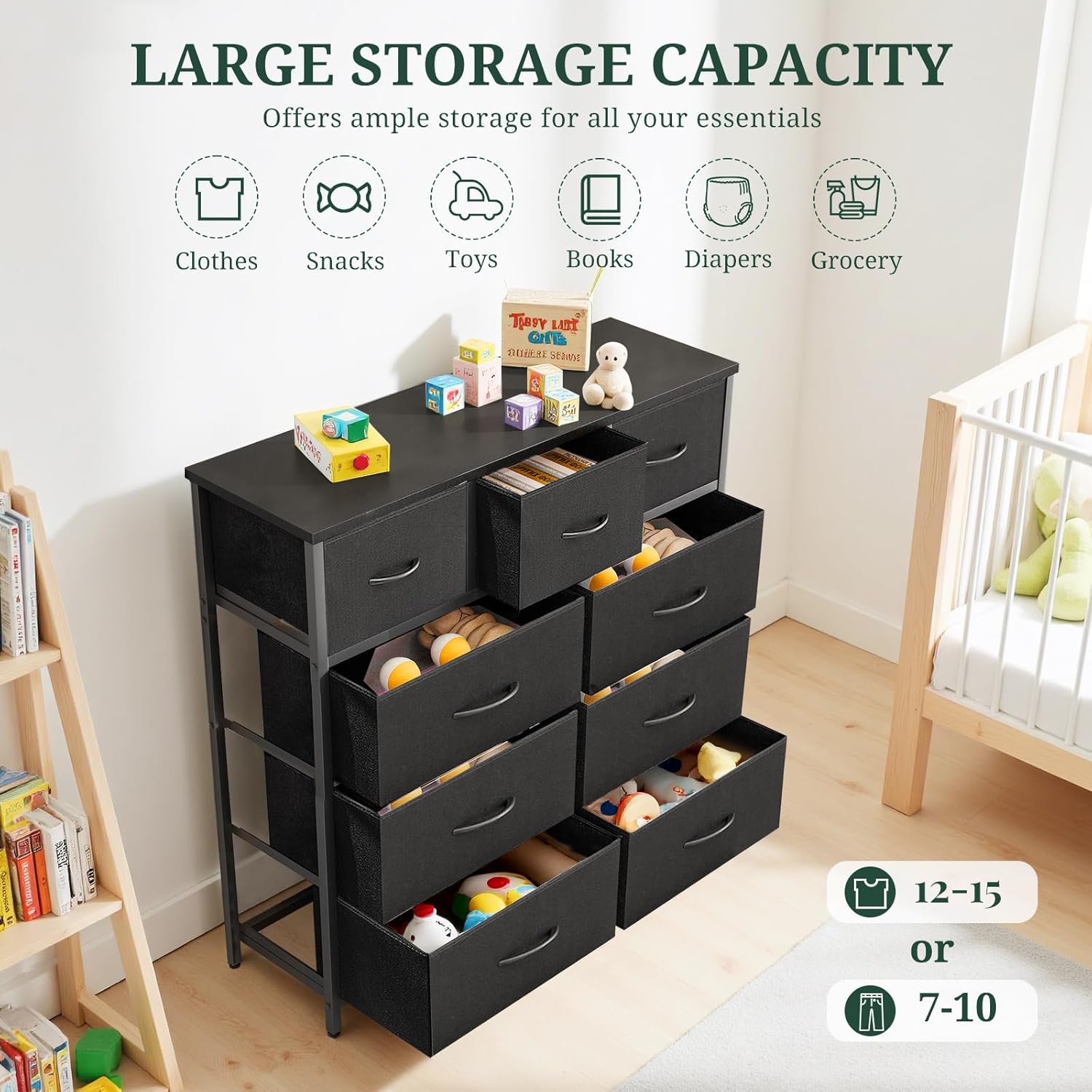
| Drawer Configuration | 6 large drawers (ideal for jeans, pants, sweaters) + 3 small drawers (socks, underwear, T‑shirts, accessories) |
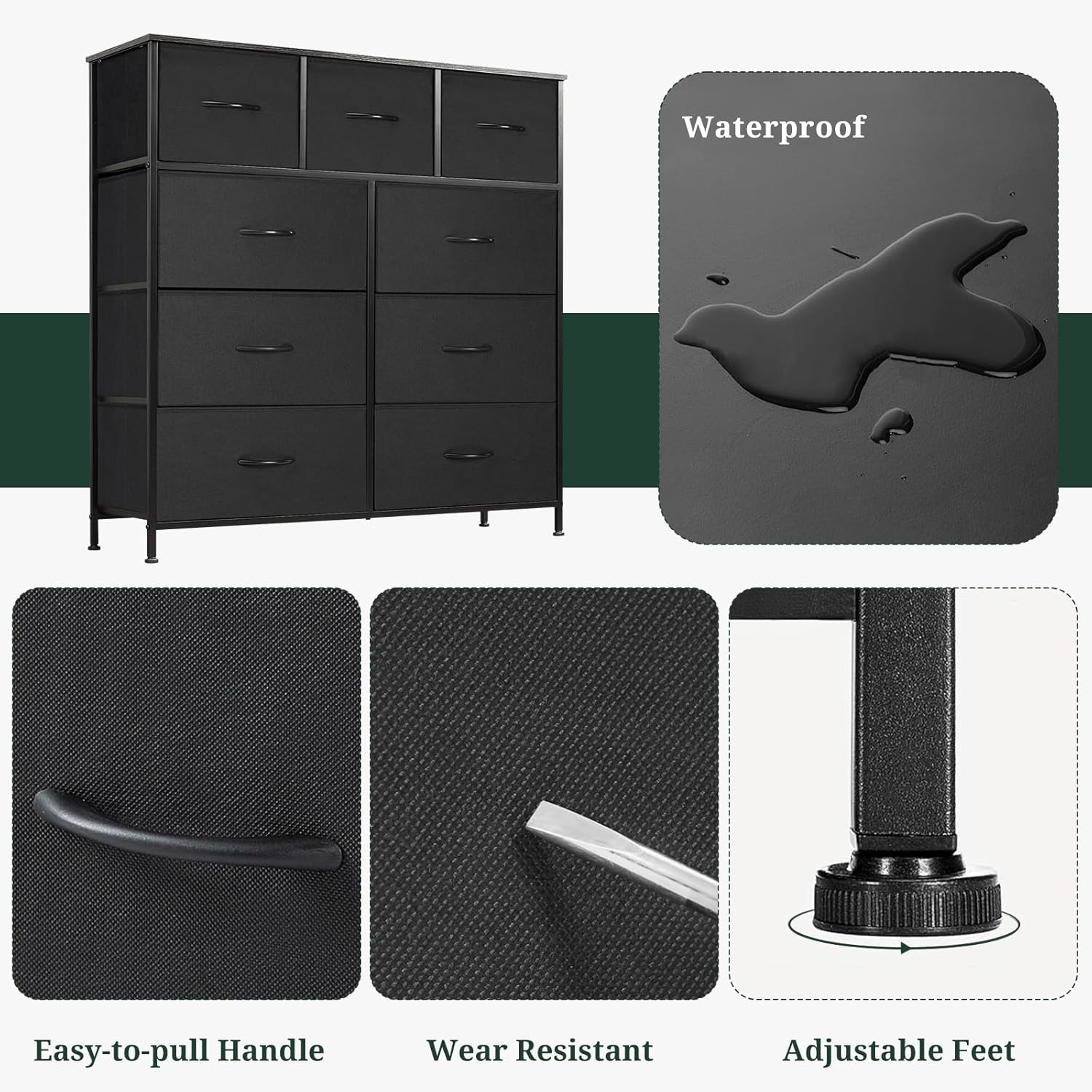
| Materials | • Steel frame (powder‑coated for corrosion resistance) • MDF wooden top with scratch‑ and water‑resistant finish • Breathable non‑woven fabric drawers |
| Safety Features | Four adjustable leveling feet; included anti‑tip safety kit (wall anchor straps) |
| Style | Modern wood‑and‑fabric aesthetic; compatible with modern, minimalist, rustic, farmhouse, and transitional interiors |
| Assembly | All hardware and illustrated instructions provided; estimated build time < 30 minutes |
| Color Finish | Black frame with natural‑tone wooden top and neutral fabric bins |
These specifications lay the groundwork for evaluating how the dresser performs in real‑world settings.
2. Build Quality and Materials
Steel Frame
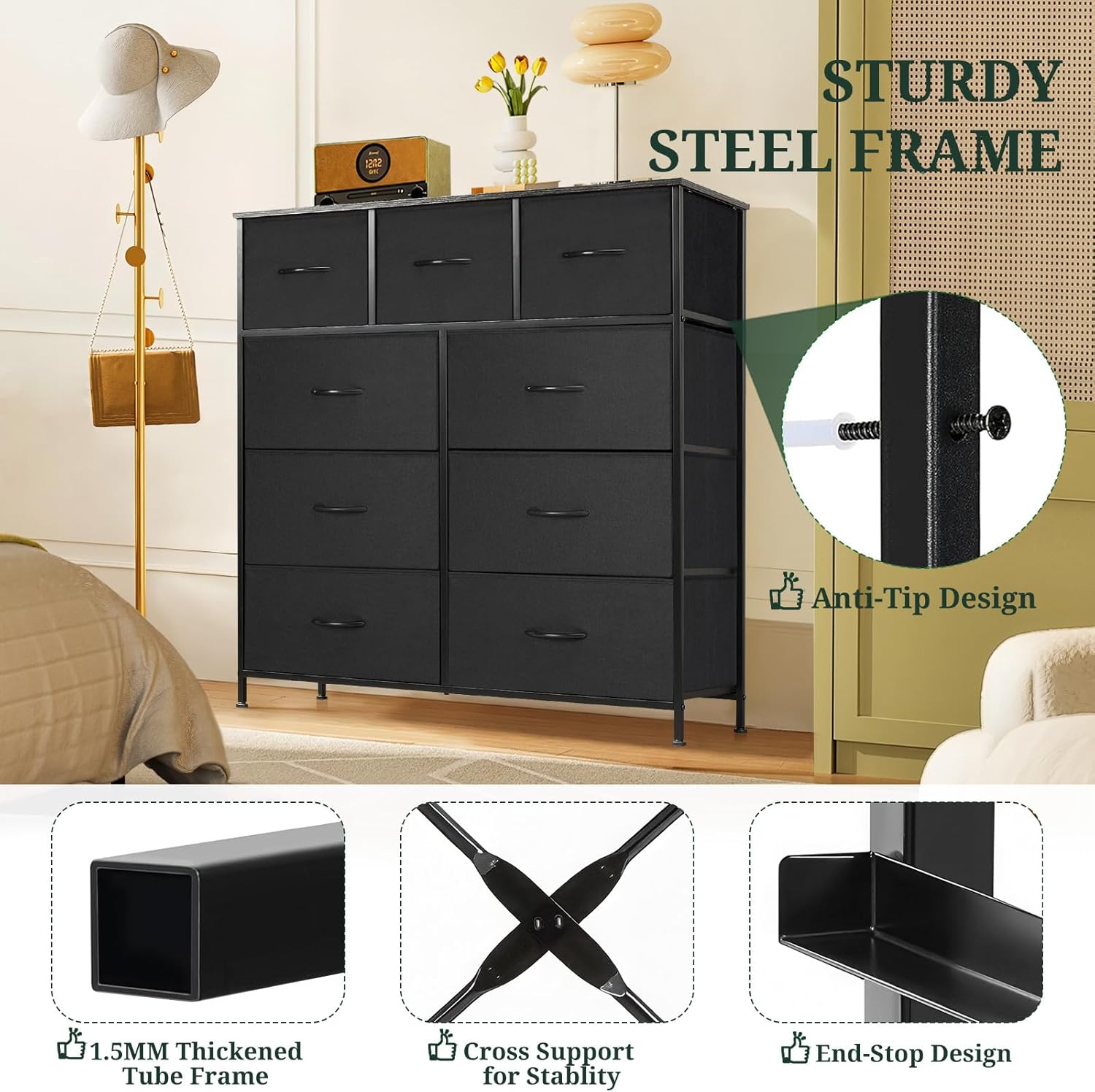
The core skeleton is a steel framework, a choice that immediately signals robustness. Steel’s high tensile strength resists bending under load, which is essential when the dresser is fully loaded with clothing, linens, or decorative items. The powder‑coated finish adds a layer of protection against rust and scratches, extending the lifespan of the frame in humid environments such as bathrooms or basements.
MDF Wooden Top
Medium‑density fiberboard (MDF) is selected for the top surface because it offers a smooth, uniform plane that can be finished to resist both scratches and minor water spots. While MDF is not as dense as solid hardwood, the manufacturer’s claim of a scratch‑ and water‑resistant coating suggests that everyday use—placing a lamp, a photo frame, or a small potted plant—will not mar the surface easily. The top also contributes to the dresser’s visual weight, grounding the lighter fabric bins.
Fabric Drawers
The drawers are constructed from a breathable non‑woven fabric, similar to that used in reusable shopping bags. This material is lightweight, which reduces the overall mass of the unit and makes each drawer easy to pull open. Importantly, the fabric is soft‑sided, eliminating hard edges that could snag delicate garments such as silk blouses or lace underwear. Breathability helps prevent moisture buildup, a subtle advantage for storing items that may be prone to mildew in damp climates.
Overall, the combination of a rigid steel skeleton, a protective MDF top, and pliable fabric bins creates a hybrid construction that balances strength with a softer, more tactile user experience.
3. Design Aesthetics and Versatility
The dresser’s visual language leans toward a contemporary wood‑and‑fabric mash‑up. The black steel frame provides a neutral, industrial undertone, while the wooden top introduces warmth. The fabric bins, typically in a muted gray or beige, soften the overall look. This triad enables the piece to sit comfortably within several décor spectra:
- Modern/Minimalist – Clean lines, limited ornamentation, and a monochrome palette align with minimalist sensibilities.
- Rustic/Farmhouse – The wooden top evokes a reclaimed‑barn feel; paired with metal accents, it nods to farmhouse chic.
- Transitional – The blend of metal and wood bridges traditional and contemporary styles, making the dresser a flexible anchor point in eclectic rooms.
Because the top is a solid surface, it doubles as a display platform. Users can arrange a small vignette—perhaps a table lamp, a stack of books, or a decorative tray—without needing an additional piece of furniture. This dual functionality enhances the dresser’s value, especially in small apartments where every surface must earn its keep.
4. Storage Capacity and Organizational Logic
Drawer Allocation
The six larger drawers measure roughly 12 in (H) × 13 in (W) × 10 in (D) (estimated from the overall dimensions), providing ample volume for bulkier items such as jeans, sweaters, or folded blankets. The three smaller drawers, positioned either above or below the large ones depending on the specific model, are suited for accessories, undergarments, or rolled‑up t‑shirts.
Fabric Benefits
Unlike rigid plastic or wood drawers, the fabric bins conform slightly to the shape of their contents. This adaptability can be advantageous when storing irregularly shaped items (e.g., a rolled scarf or a pair of shoes). Moreover, the soft interior reduces the risk of creasing delicate fabrics, a point that will appeal to those who keep a curated wardrobe.
Limitations
Because the drawers are fabric‑based, they lack the structural rigidity to support heavy objects placed directly on top of them (e.g., a stack of hardcover books). Users should avoid overloading a single drawer with dense items, as the fabric may sag over time. However, for typical clothing storage, the load capacity is more than adequate.
5. Safety and Stability Features
Adjustable Feet
Four screw‑in leveling feet allow the dresser to compensate for uneven flooring—a common issue in older homes or apartments with settled foundations. By turning each foot, the user can eliminate wobble, ensuring that the unit sits flush and that the drawers operate smoothly.
Anti‑Tip Kit
Included in the package are wall‑anchor straps, screws, and wall plugs. Attaching the dresser to a stud or using appropriate anchors dramatically reduces the risk of forward tipping, a critical consideration for households with children or pets. The anti‑tip hardware is discreet; once installed, the straps are hidden behind the unit, preserving the clean aesthetic.
Load Distribution
The steel frame’s central cross‑supports help distribute weight evenly across the base, further enhancing stability. When combined with the anti‑tip kit, the dresser meets many voluntary safety standards for freestanding storage furniture.
6. Assembly Experience
The manufacturer advertises a sub‑30‑minute build time, a claim that holds up under scrutiny of the supplied components:
- Hardware Pack – All screws, cam locks, dowels, and the anti‑tip kit are pre‑sorted and labeled.
- Instruction Manual – Illustrated step‑by‑step diagrams accompany brief text captions, minimizing language barriers.
- Tool Inclusion – A small Allen wrench and a Phillips‑head screwdriver are provided, eliminating the need for a personal toolbox for most users.
The primary assembly steps involve:
- Frame Construction – Connecting the vertical steel posts with horizontal brackets using cam locks.
- Top Attachment – Securing the MDF top with screws that sit flush into pre‑drilled holes.
- Drawer Installation – Sliding the fabric bins onto metal runners that click into place; no additional fasteners are required for the drawers themselves.
- Foot Adjustment – Threading the leveling feet into the base plates.
- Anti‑Tip Securing – Affixing the straps to the rear of the dresser and anchoring them to the wall studs.
A novice assembler can comfortably follow the visual cues, while experienced DIY enthusiasts may finish even faster. The absence of complex joinery (e.g., dovetail or mortise‑and‑tenon) means that the dresser relies on mechanical fasteners, which, while less traditional, are perfectly adequate for a piece intended for light‑to‑moderate daily use.
7. Suitability for Different Living Spaces
| Setting | Why It Works | Considerations |
|---|---|---|
| Bedroom (Primary) | Ample clothing storage; top surface for night‑lamp or alarm clock. | Ensure wall anchoring if the dresser stands tall against a bedroom wall. |
| Closet Organizer | Slim depth (11.8 in) allows placement inside a reach‑in closet without protruding. | Verify closet rod height does not interfere with the top surface. |
| Hallway/Entryway | Acts as a catch‑all for mail, keys, scarves; top can hold a decorative bowl or small plant. | Anti‑tip kit becomes crucial if placed in a high‑traffic area where bumps are likely. |
| Home Office | Stores office supplies, paperwork, or spare linens; top supports a monitor or printer. | Fabric drawers are not ideal for heavy printer paper reams; distribute weight across multiple drawers. |
| Dorm Room / First Apartment | Lightweight frame facilitates moving; easy assembly suits temporary living situations. | The anti‑tip kit may be less necessary in a dorm where wall anchoring is prohibited; rely on leveling feet for stability. |
| Living Room (as Accent Storage) | Can house blankets, board games, or media accessories; top doubles as a display shelf for photos. | Ensure the dresser’s style complements existing furniture; the black frame may contrast with lighter upholstery. |
The relatively narrow depth (just under 12 in) is a standout feature for tight spaces, allowing the dresser to slide into niches where a conventional, deeper chest would be prohibitive.
8. Pros and Cons (Based on Design and Specs)
Pros
- Robust Steel Frame – Provides long‑term durability and resistance to sagging.
- Scratch‑Resistant MDF Top – Offers a stable surface for everyday items while protecting against minor wear.
- Breathable Fabric Drawers – Soft on clothing, lightweight, and helps mitigate moisture buildup.
- Versatile Aesthetic – Neutral black‑wood‑fabric combo fits multiple interior styles.
- Thoughtful Safety Features – Adjustable feet and anti‑tip kit address stability concerns, especially for families.
- Efficient Footprint – Deep‑slim dimensions maximize storage without consuming excessive floor area.
- Straightforward Assembly – Clearly labeled parts and included tools reduce setup time and frustration.
- Multi‑Room Utility – Suitable for bedroom, closet, hallway, entryway, office, and dorm environments.
Cons
- Fabric Drawer Load Limits – Not suited for extremely heavy items; users must avoid overloading individual drawers.
- MDF Top Vulnerability to Severe Impact – While scratch‑resistant, a sharp blow could dent or chip the surface; care is needed when moving heavy objects atop it.
- Aesthetic Subjectivity – The industrial black frame may clash with ultra‑warm, all‑wood décor schemes lacking metal accents.
- No Internal Dividers – Drawers are open bins; users seeking compartmentalization for small items (jewelry, ties) will need to add their own organizers.
- Limited Color Options – Currently offered only in black frame with neutral top; those seeking a broader palette may need to look elsewhere.
9. Value Proposition
When weighing cost against the feature set, the dresser occupies a competitive mid‑range tier. The steel frame and MDF top contribute to a lifespan that can exceed many all‑fabric or particle‑board alternatives, while the fabric bins provide a gentler touch for clothing. The inclusion of an anti‑tip kit—often sold separately for similar furniture—adds tangible safety value without extra expense. For consumers who prioritize a blend of sturdiness, aesthetic neutrality, and space‑efficient storage, the piece delivers a strong return on investment.
10. Final Thoughts
The 9‑Drawer Dresser for Bedroom, with its anti‑tip tall storage organizer chest construction, presents a well‑rounded solution for modern storage challenges. Its steel framework ensures longevity, the protected wooden top offers a functional display area, and the fabric drawers deliver a clothing‑friendly, lightweight storage experience. Safety considerations are thoughtfully addressed through leveling feet and a wall‑anchor kit, making the piece suitable for homes with children or pets. Assembly is straightforward, and the slim depth enables placement in tight quarters where bulkier dressers would falter.
While the fabric drawers impose reasonable limits on heavy loads, and the MDF top demands respect against sharp impacts, these constraints are typical for furniture in this category and do not detract markedly from the overall utility. The dresser’s neutral aesthetic allows it to migrate between styles and rooms, offering flexibility that many static, single‑purpose storage units lack.
In sum, for anyone seeking a tall, stable, and visually adaptable storage solution that can handle everyday clothing, accessories, and light décor while fitting comfortably into modestly sized spaces, this 9‑Drawer dresser merits serious consideration. It successfully marries durability with a soft touch, delivering a piece that is as practical as it is pleasing to the eye.